
What is Peri-menopause?
Peri-menopause literally means “around” the menopause. Peri-menopause symptoms can start a few months before a woman becomes menopausal to as far back as 8 to 10 years prior to her menopause. Women start experiencing mild to moderate signs and symptoms of hormonal imbalances years before they reach their menopause.
One of the very first peri-menopause symptoms women start noticing are changes to their sleep pattern and mood which could be transient or more persistent. As this time of life usually coincides with increasing professional, family and social responsibilities the link between the emergence of these symptoms and existence of a hormonal imbalance is often missed.
Symptômes de la péri-ménopause
Peri-menopause symptoms can begin from any time in our late 30s when we can have anovulatory menstrual cycles. This means that we do not ovulate every time we have a period. This can result in reduced progesterone levels. Since this is the hormone which helps regulate emotions and also helps with maintenance of sleep, these symptoms can begin.
Le sommeil est essentiel à notre santé et à notre bien-être. Si nous n'avons pas eu une bonne nuit de sommeil, nous nous sentons souvent irritables et facilement débordés pendant la journée. Les déséquilibres hormonaux peuvent avoir un effet négatif sur notre gestion du stress et sur la production d'autres hormones comme l'hormone thyroïdienne.
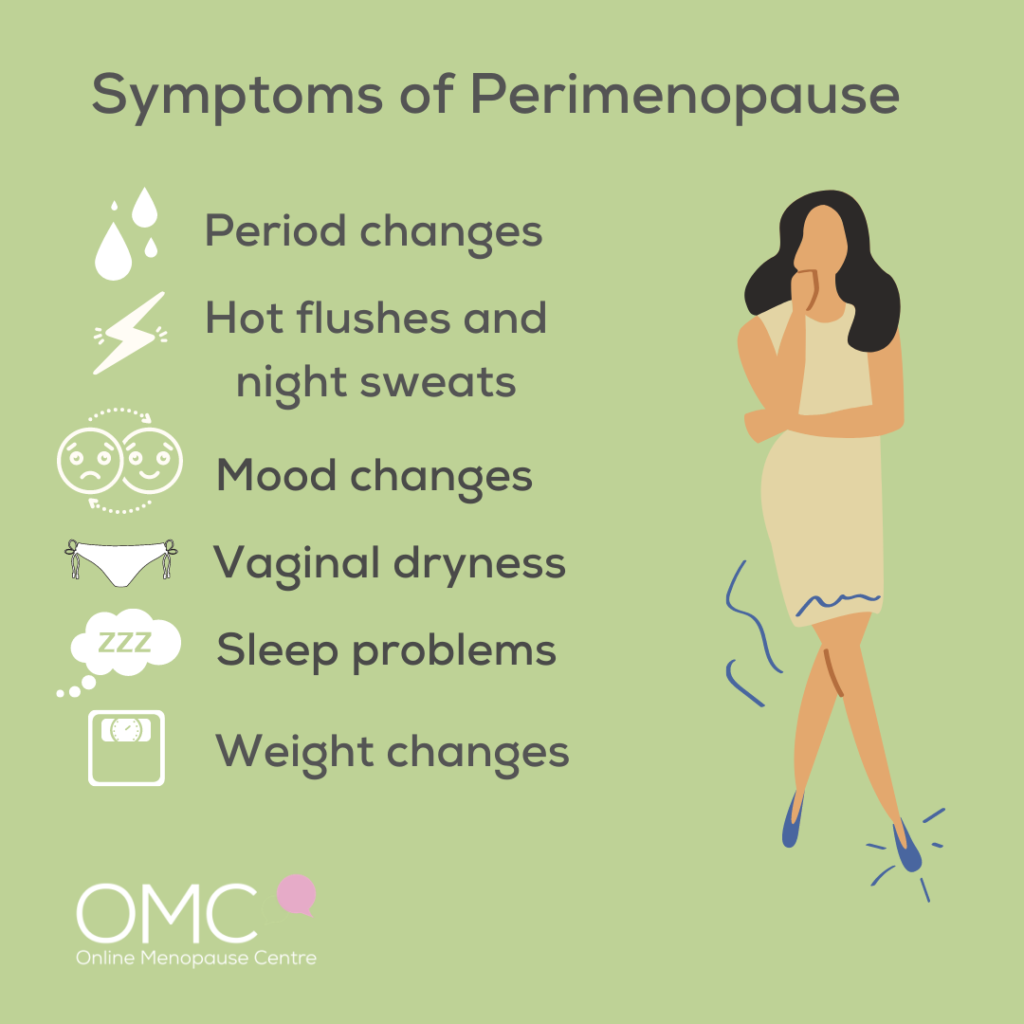
Peri-menopause symptoms can include sleep disturbance, mood changes like increasing anxiety, low mood or depression, irritability, achiness in joints and muscles and water retention and breast tenderness.
Traitement de la péri-ménopause
Fluctuations in progesterone and estrogen are at their peak during peri-menopause. This can make you more prone to becoming insulin resistant. This can in turn affect blood glucose (blood sugar). These changes can create a predisposition to weight gain, particularly around the waist area, fatigue and difficulty concentrating.
On the other hand, the liver has a crucial role in supporting oestrogen metabolism and therefore healthy estrogen levels in the body. This is of particular importance in peri-menopause as progesterone levels start declining quicker than estrogen making you more naturally prone to an estrogen/progesterone imbalance.
It may be useful to check the hormonal levels at this stage. Although there can be a significant variation in quantities of hormones a woman produces from month to month but we will get an idea of her hormone production. If clinically indicated, hormonal balance can be achieved with hormone replacement treatment. To find out more please read our Hormones Replacement Therapy (HRT) page
.
Nutrition & Lifestyle recommendations for
Peri-menopause
Recommandations nutritionnelles
Les meilleurs aliments pour soutenir une glycémie saine pendant la périménopause sont les suivants :
- Complex carbohydrates – brown/wild rice, lentils, amaranth, quinoa, oats, and wholemeal sourdough bread
- Sources of protein – organic eggs, wild fish, organic lean meat and poultry, beans/legumes, nuts/seeds, as well as fibre, with every meal
- Avoiding refined carbohydrates – sugar such as white pasta, white rice, white bread, pastries, sugary cereals and biscuits
Les meilleurs aliments pour soutenir la fonction hépatique sont les suivants :
- Brocoli, chou-fleur, choux de Bruxelles, chou frisé, noix du Brésil, artichauts et ail
- Les aliments riches en fibres tels que les flocons d'avoine, les graines de lin moulues, les graines de chia, les légumes à feuilles vertes, les céréales et les amandes.
- Curcuma et thé vert
- Beaucoup d'eau pour favoriser la désintoxication


Recommandations sur le mode de vie
S'il n'y avait qu'un seul conseil à donner aux femmes en périménopause, ce serait de commencer à écouter leur corps et de consacrer du temps à prendre soin d'elles-mêmes. Chaque respiration profonde, chaque cours de yoga et chaque minute de méditation comptent.
Il vous aidera à gérer l'anxiété et à réduire les nuits blanches, deux symptômes précoces typiques de la périménopause causés par la baisse rapide de la progestérone, l'"hormone de la détente". L'un des aspects clés des soins personnels est qu'ils sont essentiels pour maintenir des niveaux de cortisol sains, également connus sous le nom d'"hormone du stress".
- Breathe! – short breathing exercises such as “Breathing Space” and “Pranayama” before or during potential stressful situations
- Meditation – start the day with a short meditation to set the tone for the day (10 minutes is ideal but even minute counts if that is all you can do)
- Practice yoga – yoga engages the body, the breath and the mind, bringing a sense of calmness and connection with the body
