
Übelkeit in den Wechseljahren - Was sind die Ursachen und Behandlungen?
Übelkeit ist selten ein Symptom der Menopause, wird aber häufig von Frauen erlebt, die sich im Übergang zur Menopause befinden. Dies könnte sehr gut mit den zahlreichen Symptomen der Wechseljahre erklärt werden, die bei Frauen Stress und Angst auslösen, wodurch das als Cortisol bekannte Stresshormon produziert wird. Cortisol wandert dann durch den Blutkreislauf und verursacht Beschwerden im Verdauungstrakt, was wiederum dazu führt, dass man sich krank fühlt.
Die offensichtliche Antwort darauf wäre, Ihre Wechseljahrsbeschwerden zu lindern, die den Stress verursachen, aber Sie müssen wissen, dass Behandlungen und Medikamente wie die Hormonersatztherapie ebenfalls Übelkeit verursachen können. Wenn Sie in den Wechseljahren unter Übelkeit leiden, sollten Sie diesen Artikel lesen, um Ihren Zustand besser zu verstehen und zu wissen, wie Sie ihn behandeln können.
Ist Übelkeit ein Symptom der Menopause?
Übelkeit in den Wechseljahren ist ein häufiges Problem von Frauen, die diesen bedeutenden Lebenswandel erleben. Auch wenn es nicht das offensichtlichste Symptom ist, berichten viele Frauen über gelegentliche Anfälle von Übelkeit oder Magenverstimmung. Übelkeit ist gleichbedeutend mit Brechreiz; sie kann vor dem Erbrechen auftreten, obwohl dies nicht immer der Fall ist. In seltenen Fällen kann auch eine Hormonersatztherapie (HRT) zu Übelkeit führen.
According to the study conducted by the Department of Medicine of Massachusetts General Hospital, nausea is the nasty painless personal sensation of about to puke which is also associated with post-operative nausea, chemotherapy-induced nausea, and motion sickness.
Es ist jedoch wichtig zu wissen, dass Übelkeit allein kein eindeutiger Indikator für die Menopause ist, da sie durch eine Vielzahl von Umständen verursacht werden kann. Um der Sache auf den Grund zu gehen, ist es wichtig zu verstehen, was Übelkeit in den Wechseljahren auslöst, und mögliche Behandlungsmöglichkeiten zu untersuchen.

Was verursacht Übelkeit in den Wechseljahren?
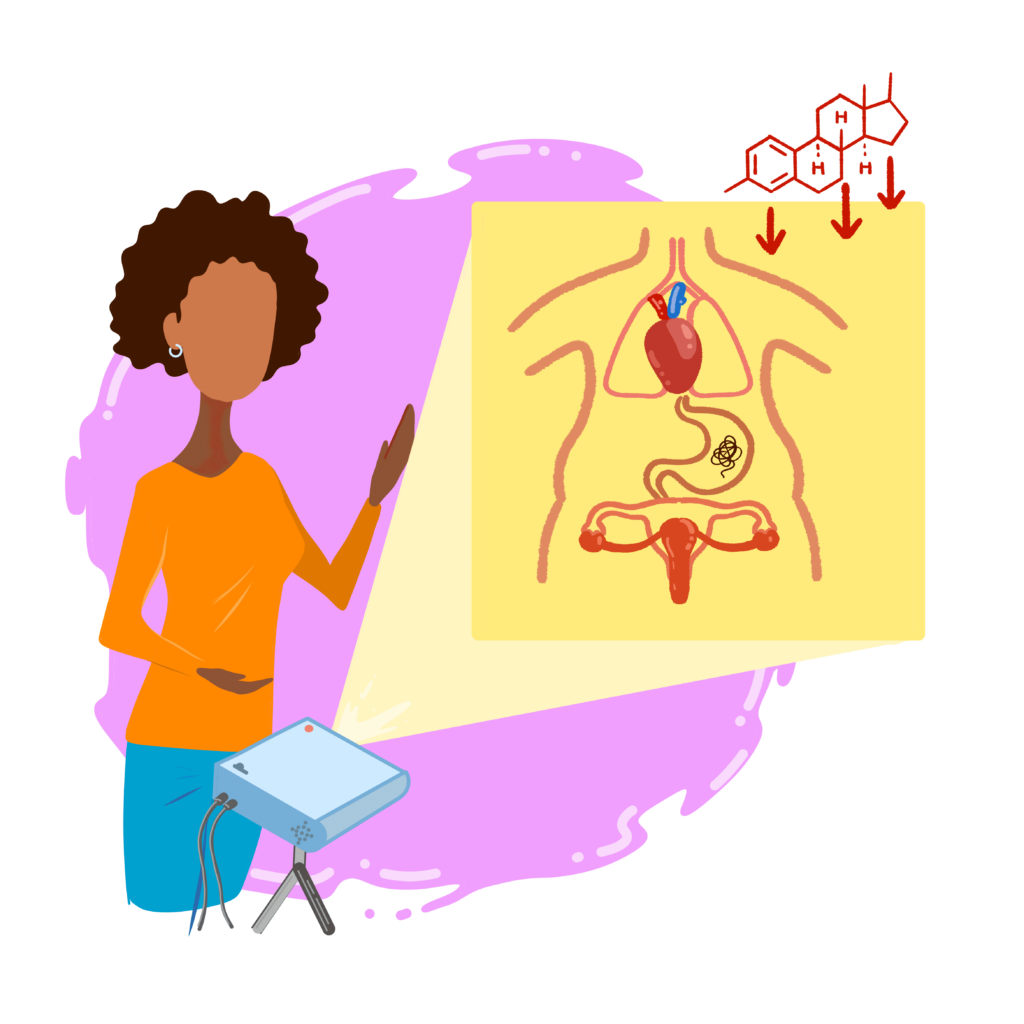
Die Ursachen für Übelkeit in den Wechseljahren sind vielfältig und können manchmal auf hormonelle Unregelmäßigkeiten zurückzuführen sein, vor allem auf einen Rückgang des Östrogenspiegels. Hormonschwankungen in den Wechseljahren können den Verdauungstrakt beeinflussen und Symptome wie Blähungen, Verdauungsstörungen und Übelkeit hervorrufen. Stress, Angstzustände oder unerwünschte Arzneimittelwirkungen sind weitere Faktoren, die Übelkeit in den Wechseljahren verursachen können.
First let’s look into the effects of hormonal changes to the digestive system which has a high chance of causing nausea. Based on the research from Margaret Heitkemper, PhD and Lin Chang, MD, there is an increase in gastrointestinal symptoms around the time of early menopause, suggesting that it could be directly related to the oestrogen withdrawal or hormonal changes.
In cases of patients who are undergoing treatments where anxiety peaks (which is a well-known symptom of menopause as well), severity of nausea has the most positive correlation with anxiety as suggested in the study by Shiraz University of Medical Sciences. As a result, lessening nausea and vomiting prior to and subsequent to treatment could help avoid or mitigate physical and psychological side effects like fatigue and anxiety. It may also improve the patients’ quality of life.
Many women seek relief from this problem through
hormone replacement therapy (HRT) or other treatments. It is vital to investigate whether HRT can effectively treat the nausea associated with menopause in order to fully comprehend its potential benefits.
Kann HRT die durch die Menopause verursachte Übelkeit stoppen?
Since nausea is not one of the common direct symptoms of menopause, it is not advised that HRT be a valid treatment for menopause-caused nausea. While HRT is most commonly used to treat menopausal symptoms, its effect on nausea differs from person to person. Because HRT helps stabilise hormone levels, especially oestrogen, some women experience a dramatic reduction in feeling sick or nauseated, or the complete opposite of it.
According to the NHS, one of the known side effects of Hormonal Replacement Therapy (HRT) is nausea. Any side effects of medications or therapy to aid hormonal changes usually improve overtime so if possible, continue with your treatment for at least 3 months.
However, it is important to understand that HRT may not be suitable for everyone due to possible risks and adverse effects.
It is necessary to assess several options when exploring alternatives for menopausal nausea and their efficacy. If you want to look for professional advice regarding this issue, you can consult us at OMC to provide you with straight-forward answers and solutions to your problem.
Welche Behandlungen gibt es für Übelkeit in den Wechseljahren?

Zur Linderung der Übelkeit in den Wechseljahren gibt es verschiedene Behandlungsmöglichkeiten. Eine gesunde Ernährung und die Bewältigung von Angstzuständen spielen beispielsweise eine entscheidende Rolle bei der Vorbeugung von Übelkeit in dieser Phase. Im Folgenden finden Sie eine Liste von Dingen, die Sie tun können, um die Übelkeit zu lindern:
Trinken von kaltem Wasser
Ingwer in flüssiger Form oder als Lebensmittel
Essen von kleinen Portionen fettarmer Lebensmittel
Richtiges Management von Stress und Ängsten
Cortisol, also known as the “stress hormone,” raises your heart rate and blood pressure which triggers anxiety. Excess cortisol and other stress chemicals rushing through your body is also bad for digestion. These hormones can alter how your body processes food and utilises nutrients, resulting in nausea, vomiting, stomach cramps, or diarrhoea.
However, before beginning any new treatment regimen, it is important to contact a healthcare provider. Exploring these remedies can help control menopausal nausea, but recognising additional symptoms connected with hormonal nausea is also necessary to address menopause discomfort completely. If nausea stays for days and gets severe, don’t hesitate to contact us at OMC to give you proper assistance and assessment on your condition to help alleviate your situation faster.
Welche anderen Symptome treten im Zusammenhang mit hormoneller Übelkeit auf?
According to the Institute of Medical Psychology in Munich, Germany which underwent a series of experiments if stress could induce nausea. Their research results suggested that high-stress certainly causes nausea with associated gastric activity which is characterised by feeling sick and stomach upset.
During this transitional period, these interrelated symptoms can have a major impact on a woman’s quality of life. Understanding the full range of menopausal symptoms becomes essential when deciding when to seek medical help for optimal control of symptoms.

Wann sollten Sie einen Arzt aufsuchen?

At OMC, we are here to help you discuss these issues and provide advice tailored to your individual situation. When you collaborate with us, you’ll skip long queues and enjoy quick access to an abundance of valuable information.
Contact us today to see how we may assist you with your symptoms.