
Was ist Osteoporose?
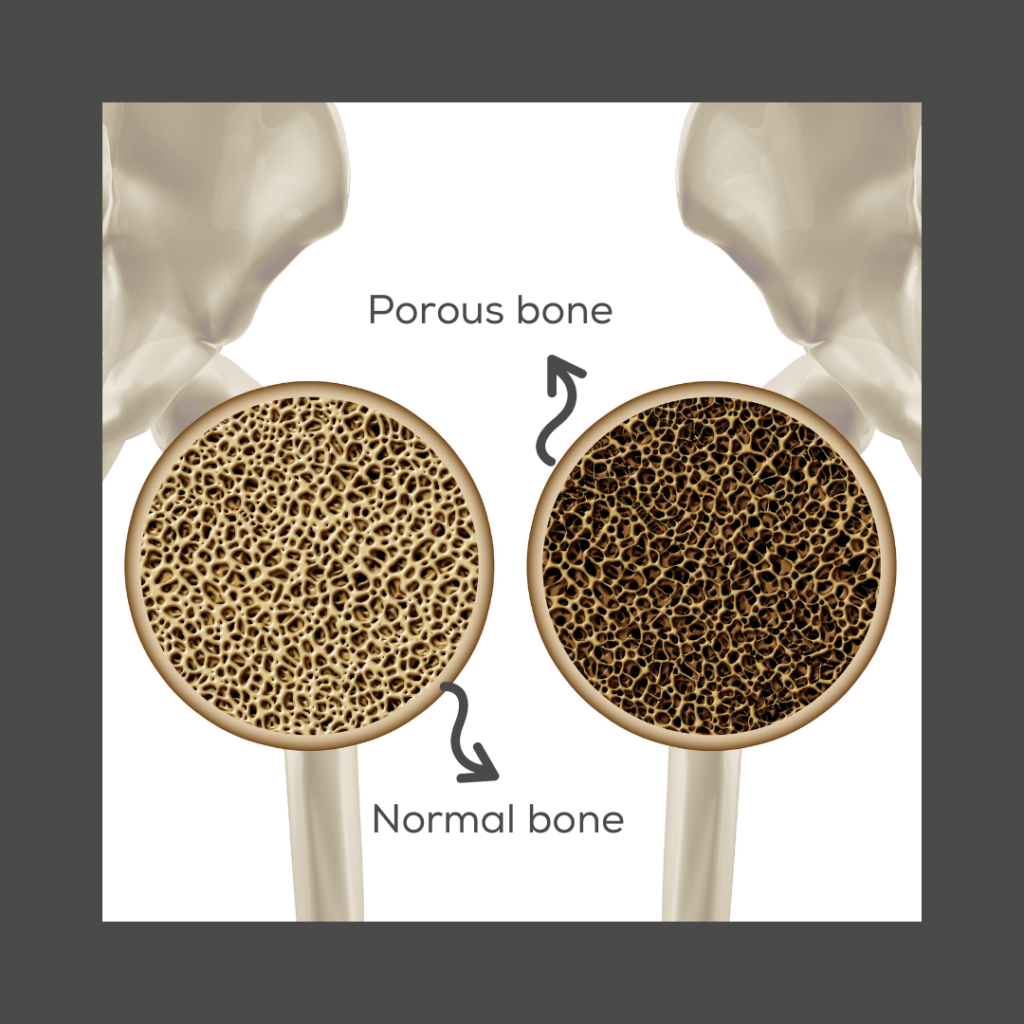
Osteoporosis is a health condition that weakens bones, making them fragile and more likely to break. It develops slowly over several years and is often only diagnosed when a fall or sudden impact causes a bone to break (fracture).
Factors that could increase the risk of developing
Osteoporosis
Ethnizität
Weiße und Asiaten haben ein höheres Risiko, obwohl sowohl Männer als auch Frauen aller Ethnien betroffen sein können.
Sex
Frauen haben ein höheres Risiko, an Osteoporose zu erkranken, insbesondere nach der Menopause, wenn ihr Hormonspiegel sinkt.
Karosserierahmen
Menschen mit einem niedrigeren BMI (Body-Mass-Index) und einer kleineren Statur haben ein höheres Risiko, an Osteoporose zu erkranken. Dies kann auf die genetische Veranlagung einer Person zurückzuführen sein oder als Folge einer Essstörung auftreten. Familienanamnese: Wenn ein Elternteil oder ein Geschwisterteil an Osteoporose erkrankt ist, besteht ein höheres Risiko, insbesondere wenn Mutter oder Vater einen Hüftbruch erlitten haben.
Alter
Je älter wir werden, desto mehr kann das Gleichgewicht zwischen Knochenaufbau und -abbau aus verschiedenen Gründen gestört sein, z. B. durch den Alterungsprozess selbst, aber auch durch chronische Krankheiten oder Medikamente.
Lebensstil
Rauchen, übermäßiger Alkoholkonsum, Bewegungsmangel und ungesunde Ernährung erhöhen das Risiko, an Osteoporose zu erkranken.
Medizinische Bedingungen und Medikamente
Einige Krankheiten wie Zöliakie, IBD (entzündliche Darmerkrankung), Krebs, rheumatoide Arthritis sowie Behandlungen, die zur Behandlung von Krankheiten wie Krebs, Magenreflux, Krampfanfällen und Transplantatabstoßung eingesetzt werden, können ebenfalls zur Entwicklung von Osteoporose beitragen.
Prävention und Behandlung von Osteoporose
We know that progesterone helps make new bone and oestrogen helps reduce the break-down of bone. Additionally, testosterone makes the bonds between bone cells stronger. This is why a woman who has considerably less hormones after her menopause is at a higher risk of developing osteoporosis.
Men also have an increased risk of developing osteoporosis as they age, but the reduction in their testosterone levels is more gradual and therefore their risk is less frequent. Thyroid levels are also important players in our bone health and strength. Too much thyroid hormone can result in osteoporosis.
Hormone replacement therapy (HRT)
: replacing estrogen, progesterone and testosterone in peri-menopausal and menopausal women can prevent and/or reduce their risks of developing osteoporosis. Currently, there is no data to suggest what level of blood hormones we should aim for, but we know that replacing hormones in women who either have a strong family history of osteoporosis or are at higher risk of developing this condition protects against it.
Empfehlungen für die Ernährung
- Calcium-rich foods: dairy products (particularly kefir, which has the added advantage of being a probiotic), green vegetables (such as broccoli, kale, and collard greens), sardines and soybeans.
- Vitamin K-rich foods: beef liver, chicken meat, cheese and natto (fermented soybeans) are rich in vitamin K2 (the type of vitamin K that has a more significant role in bone health).
- Vitamin D-rich foods: oily fish, egg yolks and whole milk, and do not forget to spend time outdoors as the sun is our main source of vitamin D as the body makes vitamin D from direct sunlight.

Prävention und Behandlung von Osteoporose

Bone health and exercise go hand in hand, as exercise slows down the rate of bone loss and increases bone density. Try jogging, dancing, climbing, tennis, star jumping or your favourite aerobics class at the gym. Alternatively, brisk walking (ideally in nature for an extra boost of vitamin D) is a great lower impact option – these are weight bearing exercises and are known to improve bone mass density.
Combine with resistance exercises, such as weight lifting or elastic resistance bands, to improve bone strength and complement with yoga or Pilates to improve flexibility and posture. Mix and match the 3 types of exercise on a weekly basis, aiming for a minimum of 30 minutes exercise daily.
Welche neuen Übungen Sie auch immer in Angriff nehmen, sprechen Sie mit Ihrem Arzt, um sicherzugehen, dass sie für Sie geeignet sind, insbesondere wenn bei Ihnen in der Vergangenheit Osteoporose oder ein Knochenbruch diagnostiziert wurde.
