
Training and Awareness: This involves educating all employees, irrespective of gender or age, about the impact of menopause and how it can affect their colleagues. This encourages empathy and understanding within the workplace.
Can You Get Time Off Work Because Of Menopause? The Menopause Guide For Employees
As we progress towards a more empathetic and inclusive society, understanding workplace rights during crucial life transitions, such as menopause, is paramount. For many women in the UK, this is a pressing concern.
While menopause is not a protected characteristic under the Equality Act, employees experiencing it have rights and deserve understanding and support.
In this article we delve deeper into the legal aspects and workplace policies concerning menopause, shedding light on the rights and support available for those experiencing this natural life transition.
If you’re experiencing menopause symptoms that are affecting your performance at work, please don’t hesitate to reach out to our menopause specialists here at OMC to explore what treatment options are available.
Menopause and the Law in the UK
Menopause can present a range of symptoms, all of which can affect one’s ability to perform at work optimally.
With menopause symptoms such as hot flushes, night sweats, headaches and migraines, joint pain and muscle soreness, these symptoms can all affect work performance and may result in the need for sudden time off, difficulty in adhering to stringent working schedules, increased irritability, and a decrease in concentration levels.
Addressing Menopause Struggles at Work
Open and frank conversations with line managers can help alleviate work-related pressures due to menopause.
Disclosure can help inform the company about your situation, enabling them to make reasonable accommodations to ease your work environment. Such changes can include flexible work arrangements and adjustments to working conditions.
Many workplaces are recognising the importance of providing support to employees going through menopause. As such, a growing number of businesses are creating and implementing a menopause policy. This policy is typically part of a wider wellbeing or occupational health strategy. It outlines how the company will support staff experiencing menopause, with measures that might include:
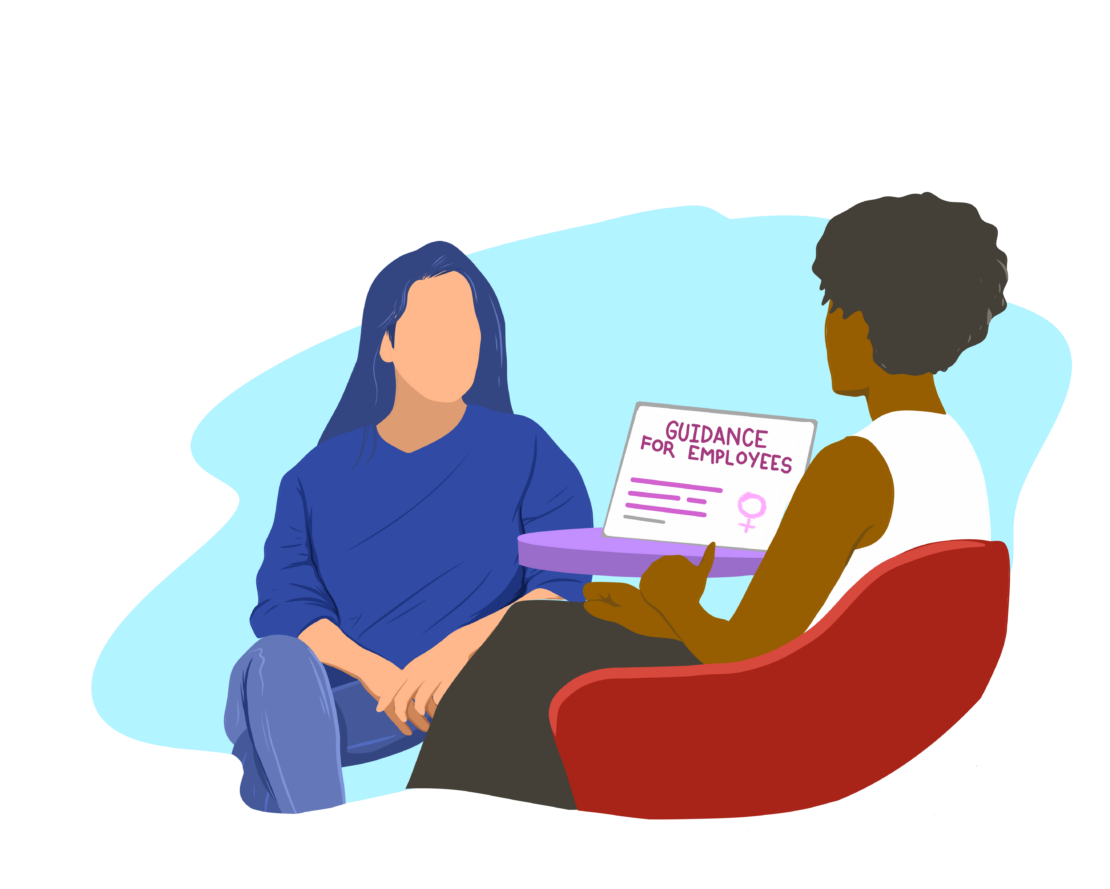

Supportive Management: Line managers are provided with guidance and menopause training to support staff going through menopause. This includes understanding what adjustments may be needed and how to handle conversations sensitively.
Workplace Adjustments: This can range from making physical changes to the work environment to accommodate symptoms such as hot flushes, to providing more flexible working hours or additional breaks.
Access to Occupational Health: Offering appointments with occupational health advisers who can suggest workplace adjustments and provide further support.
Confidentiality and Sensitivity: Ensuring that conversations and information regarding an employee’s menopausal symptoms are handled confidentially and with sensitivity.

Can You Get Time Off Work Due To Menopause?
Legally, the UK doesn’t have specific laws granting time off for menopause. However, employers have a general duty under the Equality Act 2010 and the Health and Safety at Work Act 1974 to ensure a safe and non-discriminatory working environment. This includes accommodating health issues such as menopause symptoms, which can significantly impact a woman’s work and well-being.
If you’re experiencing severe menopausal symptoms that affect your ability to perform your duties, the first step is to have a conversation with your HR department or line manager. While this may feel uncomfortable, open communication can lead to adjustments and support. Be prepared to discuss your symptoms, how they’re impacting your work, and what accommodations might be helpful.
Potential adjustments could include providing a fan or cooler workspace for those dealing with hot flushes, flexible work hours to accommodate poor sleep or fatigue, and ensuring easy access to restrooms for women experiencing frequent urination. There’s no one-size-fits-all solution; the best approach will depend on your specific symptoms and the nature of your work.
Under the Equality Act, employers are obligated to make “reasonable adjustments” to prevent workers from being disadvantaged due to their health conditions. This could potentially include granting time off work due to severe menopause symptoms. However, this isn’t explicitly outlined in the law, and each case would be considered individually.
Discrimination, Employment Rights, and Menopause
While menopause itself is not directly protected by the Equality Act 2010, discrimination against age, sex, or disability linked to menopausal symptoms is protected. If an employer treats you less favourably due to menopause symptoms, it could constitute sex or age discrimination, which is unlawful under the Equality Act.
Your employer is also legally required to consider reasonable adjustments to support you if your symptoms could be classified as a disability. It’s worth noting that menopause has been considered a disability in some employment tribunal cases. However, this is not universally accepted and would depend on the severity of the symptoms and their impact on daily life.
Furthermore, under the UK’s Health and Safety at Work Act 1974, employers are obligated to conduct risk assessments and make necessary adjustments to safeguard employees experiencing menopause.
These could include modifying the work environment to alleviate symptoms like hot flushes, promoting mental wellbeing to combat potential anxiety or depression, and ensuring easy access to restrooms and water sources to accommodate symptoms such as frequent urination or thirst. Ultimately, this legislation mandates not only a safe and non-discriminatory work environment but also encourages empathy and support towards employees during menopause.

The Employment Rights Act 2025 and Workplace Menopause Support
Workplace expectations around menopause support continue to evolve, and employers are increasingly being encouraged to take a more proactive approach to employee wellbeing, flexible working and workplace inclusion.
The Employment Rights Act 2025 places greater emphasis on employee wellbeing, workplace flexibility and employer accountability, reinforcing the importance of creating supportive workplace environments for employees experiencing menopause symptoms.
As awareness grows, many organisations are now developing formal Menopause Action Plans and menopause workplace strategies as part of broader wellbeing, diversity and occupational health initiatives.
A robust workplace menopause approach may include:
- Menopause awareness training for managers and employees
- Clear support and reporting pathways
- Flexible working arrangements where appropriate
- Menopause-informed absence management
- Workplace risk assessments and environmental adjustments
- Access to occupational health or specialist menopause support
- Menopause Champions or internal support networks
- Open, supportive and stigma-free workplace conversations
For employees, this shift is important because it reflects growing recognition that menopause symptoms can have a substantial impact on workplace wellbeing, confidence and performance.
Symptoms such as fatigue, insomnia, anxiety, poor concentration, migraines, low mood and hot flushes can affect attendance, productivity and overall work experience. Without appropriate support, many women feel forced to reduce hours, turn down opportunities or leave employment altogether.
Importantly, employers are increasingly recognising that supporting menopause at work is not simply a legal or HR issue. It is also closely linked to employee retention, workplace inclusion, productivity and staff wellbeing.
Dismissal or Forced Resignation Due to Menopause
Dismissal or forced resignation due to menopause might be grounds for an unfair dismissal, constructive dismissal, or discrimination claim. As mentioned above, you may also be protected under the Equality Act if the menopausal symptoms are considered a disability. Always consult with a legal professional if you find yourself in such a situation.
Guidance for Employers
Given the increasing demographic of women aged 50-64 in the workforce, it is vital for businesses to consider and implement measures to support and retain employees going through menopause. This can be achieved by educating the workforce about menopause, creating a supportive work environment, and implementing policies that accommodate the needs of menopausal employees.
Understanding the Menopause
Menopause is a natural transition in a woman’s life that comes with a host of physical and emotional changes. These changes can significantly impact a woman’s ability to perform regular day-to-day activities, including work. It is important for employers to be empathetic and understanding during this period, making reasonable adjustments as necessary.
Discrimination, Employment Rights, and Menopause
In some cases, menopause can necessitate a period of sick leave. However, with the right support and reasonable adjustments, individuals can continue to work effectively. It’s crucial to maintain regular communication with your GP or menopause specialist and address any concerns promptly.
With the correct measures in place, employees can continue to work and perform at their best throughout the menopausal transition.
